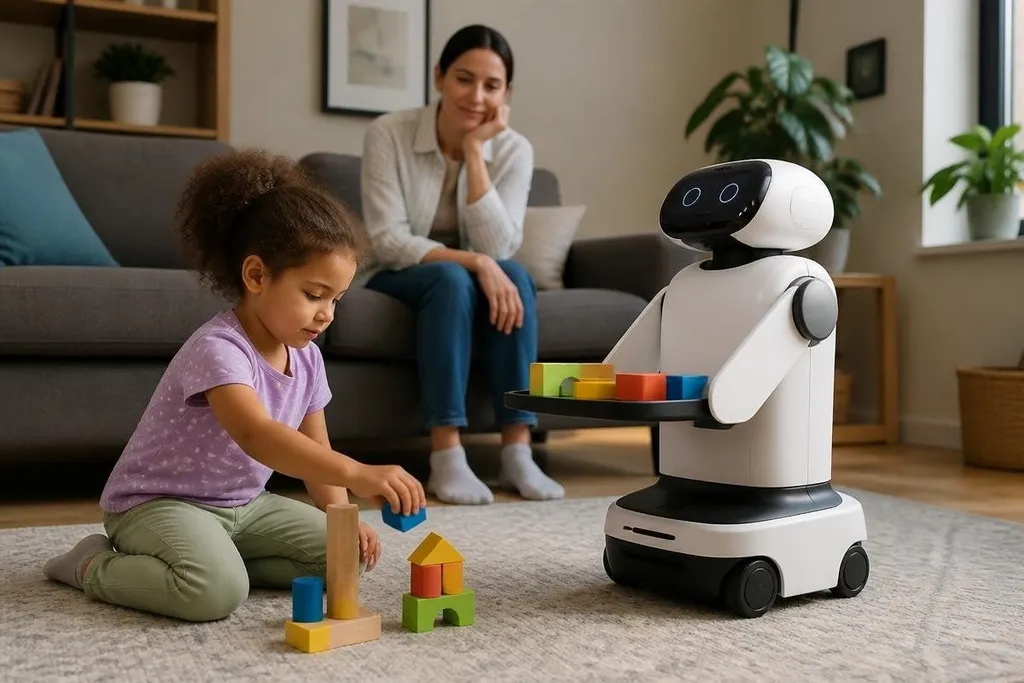
A robot that watches a child, carries food, or calls for help works in a very different setting from a warehouse robot. A mistake around a child can involve trust, privacy, injury, and a parent who was never told what the machine could do.
- A robot should support care, not replace a responsible adult.
- Cameras and microphones need a clear purpose, status light, and shutdown method.
- Any trial should start with low-risk tasks and a person within reach.
Where a robot could help
The safer uses are narrow and easy to check. A robot might carry a light object, remind a child about a planned activity, read a story, or send a message when a set condition occurs. Each task has a clear start and finish, so an adult can check whether it worked.
It could also help with routine access needs. For example, it might bring a book from a shelf or let a child call a parent through a controlled interface. Those jobs still need limits on weight, speed, room access, and contact with the child.
The machine should not decide that a child is safe because a camera sees a quiet room. A quiet room can mean many things, and a camera cannot replace adult judgment.
The human must stay responsible
Child care has changing conditions. A child may be tired, upset, ill, or moving in a way the robot did not expect. The adult in charge needs a clear view of what the robot is doing and a fast way to stop it.
That means a physical stop button matters. So does a visible sign that shows when the robot is recording, listening, moving, or waiting for help. If the robot sends an alert, the adult needs enough detail to act without guessing.
Remote control adds another risk. A person who takes control from another room may miss sounds, obstacles, or a second child entering the space. Remote operation can help in a planned task, but it should not hide who is responsible at that moment.
A child-care robot needs a record of the task, test setting, adult supervision, and failure response. Child-care robotics reporting from Robot24.com can place those details beside safety claims, so the next section can ask what data the system collects before a trial begins.
Privacy starts before the first trial
Children cannot assess a data policy like an adult buyer can. The people responsible for them need to know what the robot records, where that data goes, how long it stays there, and who can view it.
A camera aimed at a play area may record more than the task needs. A microphone may pick up other children, visitors, or family conversations. The safest setup collects less data, keeps recording off when the task does not need it, and gives adults a direct way to delete stored files.
The robot also needs a clear failure plan. If its network drops, its battery runs low, its sensors become blocked, or it loses track of its location, it should stop in a safe place and alert an adult.
It should not keep moving because a task was left unfinished.
What remains unproven
A smooth demonstration says little about a busy home, classroom, or care room. A trial should show what happens when a child changes the plan, touches the robot, blocks a sensor, or asks for something outside the approved task.
Claims about learning, comfort, or emotional support need extra care. A robot can answer with words and sounds, but that does not show that it understands a child’s needs. The machine may help start an activity while an adult handles fear, conflict, pain, or risk.
I'd keep any child-care robot inside a small task list until repeated trials show that it stops safely when people behave in unexpected ways.
Questions to answer before a trial
Use these checks before a robot enters a child’s daily routine:
- Name the adult: record who watches the task and who can stop the robot.
- Limit the room: mark where the robot may move and block access to stairs, doors, and private areas.
- Set the task: write down what the robot may do, what it must refuse, and when the task ends.
- Check the data: list every camera, microphone, stored file, account, and outside service.
- Test failure: cut the network, block a sensor, lower the battery, and press the stop control during a supervised trial.
- Review the child’s response: watch for fear, confusion, unwanted contact, or attempts to follow the robot.
A useful trial ends with records, not a feeling that the robot seemed fine. The next step should depend on the failures found, the time needed for adult supervision, and whether the child’s safety and privacy stayed clear throughout.